
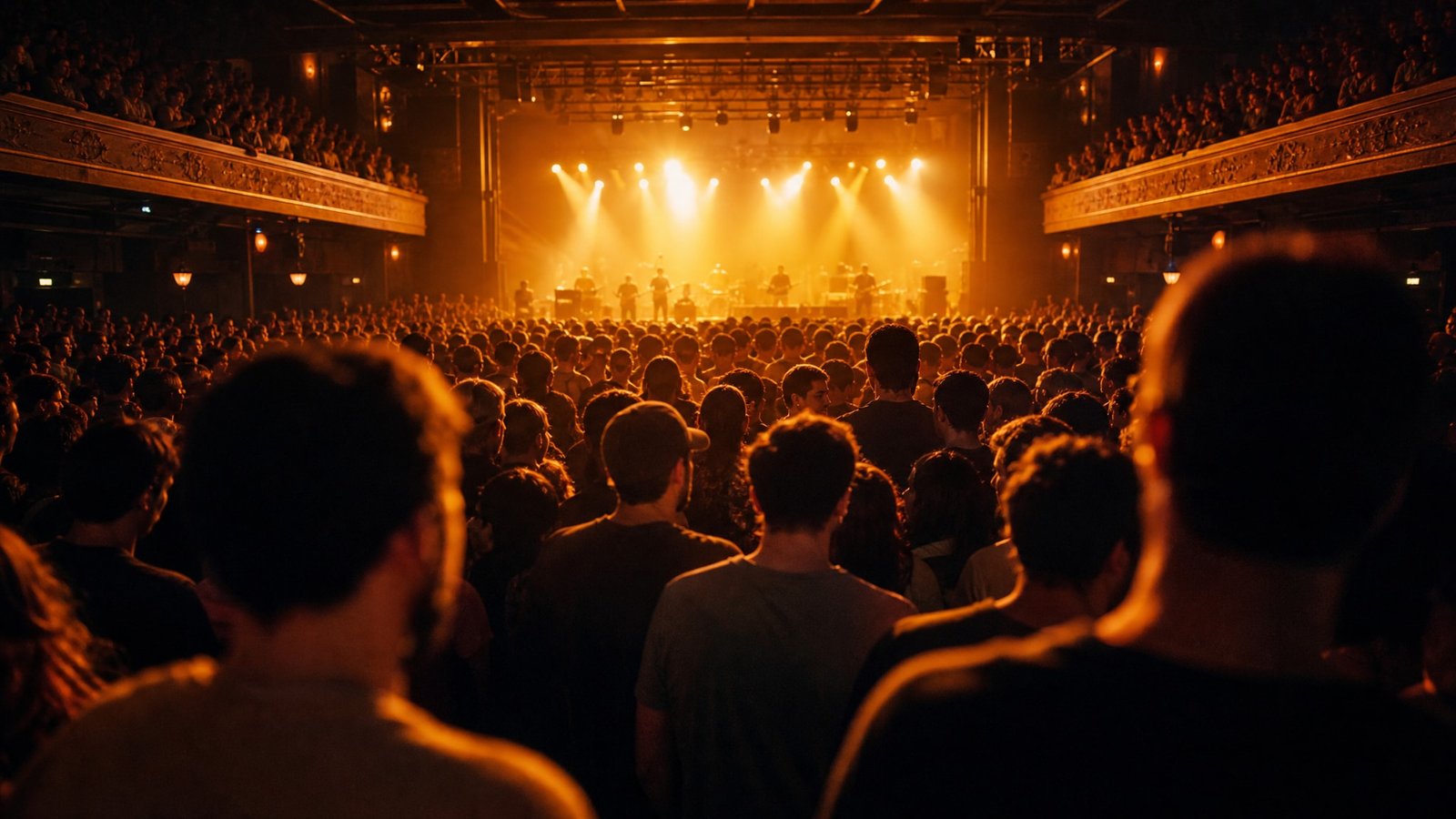
Denver concertgoers often face a choice between two distinct live music experiences when planning their 2026 and 2027 calendars. Mission Ballroom vs Ball Arena rarely comes down to ticket price alone. Each venue serves a different purpose in the local scene, and knowing the structural and atmospheric differences helps fans pick the right room for a specific artist before tickets go on sale.
Capacity and Crowd Size Differences
The most immediate distinction in any Denver venue comparison is physical scale, and that dictates everything from bathroom lines to how close you stand to the stage. Mission Ballroom can scale from 2,200 up to 3,950 guests depending on event configuration, which keeps the energy up even for developing acts (visitdenver.com/events/concerts-live-music/music-venues/). Ball Arena tops out at 21,000 attendees for concerts, an entirely different tier of crowd management and spatial experience.
Mission Ballroom Capacity Range
Mission Ballroom runs primarily as a general admission standing room venue, with limited reserved seating along the perimeter balconies. The design favors floor mobility and proximity over fixed sightlines, so the space compresses or expands with ticket sales without feeling empty at smaller shows. You end up physically closer to other fans and to the performers here than at any arena-scale alternative in the metro area.
Ball Arena Maximum Attendance
Ball Arena handles its crowds through multi-tiered permanent seating that extends hundreds of feet from the stage. Upper-level sections offer cheaper access to major tours, but they put attendees at a distance where individual performer details disappear without video screens. The volume of people also means earlier arrival for security screening and longer walks between concourses and seats.
Sound Quality and Sightline Experience
Acoustic performance varies a lot between these two spaces, because they were built for different primary functions. Mission Ballroom earned “Best Indoor Venue” recognition in Denver awards, a reflection of its reputation among local concertgoers for balanced audio in a dedicated music hall (visitdenver.com/events/concerts-live-music/music-venues/). Ball Arena, by contrast, runs high-volume production audio built to reach distant upper decks rather than deliver nuanced fidelity to critical listeners.
Acoustic Design at Mission Ballroom
This venue was built for live music, with acoustic treatments and speaker arrays calibrated for amplified performances across genres. A moveable stage configuration lets engineers optimize sound dispersion whether the show runs at the full 3,950-person capacity or a reduced 2,200-person setup. Mission Ballroom’s sound quality gets consistent praise because the room itself supports clarity instead of fighting it.
Arena Acoustics and Seating Tiers
Ball Arena started life as a sports facility, so its acoustics favor speech intelligibility and crowd noise over musical precision. Concert productions compensate with large line-array systems and delay towers. Even so, bass frequencies behave unpredictably in that much concrete and steel. Where you sit decides whether you get a balanced mix or an echo-heavy approximation, which makes lower-bowl center sections a clear upgrade for anyone who cares about sound.
Typical Genre Bookings and Artist Caliber
Tour routing economics decide which venue hosts which artist long before fans see an announcement. Mid-sized indie rock, electronic, hip-hop, and legacy alternative acts tend to land at Mission Ballroom because its capacity matches sustainable ticket sales for artists who haven’t reached stadium-level demand. Global pop stars, major hip-hop headliners, and heritage arena rock bands book Ball Arena because only that scale covers their production costs and guarantees seats for tens of thousands of regional fans.
Mid-Sized Tours at Mission Ballroom
Artists here are often in active growth phases, or they hold dedicated niche audiences that don’t need arena-scale infrastructure. The booking calendar tracks current musical trends more closely than larger venues can, favoring emerging genres and touring circuits built around cultural relevance rather than raw attendance. Fans following specific subgenres will find Mission Ballroom’s schedule a better signal of what matters in 2026 and 2027 than Ball Arena’s broader commercial lineup.
Major Arena Tours in Denver
Ball Arena locks in dates for artists whose tour budgets need maximum per-market revenue. These shows bring elaborate staging, pyrotechnics, and video content built for arena sightlines, none of which works in a smaller room. When an artist announces a Ball Arena date, that’s a sign they’ve crossed a commercial threshold that makes a venue like Mission Ballroom unworkable for that tour cycle.
Parking, Transit, and Neighborhood Access
Getting to and from the venue affects the total cost and stress of a night out almost as much as the ticket price. Ball Arena vs Mission Ballroom parking is a trade-off between guaranteed structured parking and neighborhood street availability with prices that move around. Transit differs just as much: one venue sits on the light rail line, the other leans on shuttles or rideshare.
RiNo District Logistics
Mission Ballroom sits in Denver’s River North Art District, where surface lots and private garages fill fast on peak event nights. Rideshare drop-offs happen on designated streets rather than a dedicated venue lane, which adds walking time in bad weather or during a late exit. The neighborhood does offer pre-show dining and bars within walking distance, so fans can build a full evening around the show.
Downtown LoDo Transportation
Ball Arena connects directly to Union Station via light rail, which means car-free access from across the metro area, airport included. But Ball Arena’s redevelopment plan calls for turning 65 acres of existing parking lots into mixed-use development, and that will shrink on-site parking gradually through 2026 and beyond (visionplan.ballarena.com/). Anyone driving to a future show should build in extra time for off-site parking and shuttle transfers as that construction moves forward.
Venue Amenities and Fan Comfort
Comfort expectations should match each venue’s design philosophy rather than looking for identical features. Mission Ballroom leans on open floor plans with bar service spread across the room and few obstructed views in general admission areas; standing-room stamina is just part of the deal. Ball Arena offers assigned seating with cup holders, wider concourses, and premium hospitality tiers that justify the higher prices for attendees who value comfort over proximity.
Neither venue tries to copy the other’s amenities, because they serve different priorities and different kinds of shows. Concession variety scales with venue size, but wait times often run longer at the busier spot during peak intermission.
Choosing the Right Venue for Your Preferences
The right venue depends on what you value in a live show, not on any objective ranking. Sound quality, physical closeness to performers, and genre-specific booking favor Mission Ballroom for fans who want immersive musical engagement over spectacle. Production scale, guaranteed seating, and access to global superstar tours make Ball Arena the only real option when artist availability matters more than acoustic nuance.
When Intimacy Matters Most
Choose Mission Ballroom when the artist’s catalog rewards attentive listening and you want to feel physically connected to the show. General admission standing room demands stamina, but it pays off with unobstructed sightlines and consistent audio across the main floor. This venue suits fans who show up early for position and stay locked in through the whole set rather than treating the concert as background noise.
When Production Scale Is Priority
Pick Ball Arena when the artist’s show leans on visual spectacle, choreography, or stagecraft that needs arena-scale infrastructure to land. Reserved seating removes any anxiety about arrival timing and position, so you can walk in whenever and still get a decent view. This venue works for groups with mixed mobility, or for anyone who prefers a predictable seat over moving around the floor.
Upcoming Shows at Both Venues
Static venue comparisons lose relevance fast as touring schedules shift and new announcements reshape the calendar. Denver Tickets aggregates upcoming Denver concerts at both Mission Ballroom and Ball Arena through 2027, so you can compare dates side by side without switching between ticketing platforms. Browse current listings to see which artists have confirmed dates and grab tickets before secondary market prices climb.
For more on venues beyond this pairing, the full collection of Denver venue guides covers Red Rocks, Fillmore Auditorium, Paramount Theatre, and others. Some fans also track the Red Rocks 2027 schedule separately, since that venue runs on different seasonal constraints and booking patterns than an indoor room.
Frequently Asked Questions
How many people can fit in the Mission Ballroom in Denver?
Mission Ballroom accommodates between 2,200 and 3,950 attendees depending on whether the event uses a reduced or full-capacity configuration. Most concerts operate near the upper end of this range with general admission standing room on the main floor and limited reserved seating on perimeter balconies.
Is Mission Ballroom a good venue?
Mission Ballroom has earned Best Indoor Venue recognition in local Denver awards due to its purpose-built acoustic design and consistent sightlines. It is widely regarded as one of the city’s premier mid-sized music venues because it was engineered specifically for live performance rather than adapted from another use.
What is the largest concert venue in Colorado?
Ball Arena holds approximately 21,000 attendees for concerts, making it the largest indoor concert venue in Colorado by capacity. Outdoor venues like Empower Field at Mile High can exceed this number for stadium tours, but Ball Arena remains the primary year-round indoor option for major touring acts.
Is Mission Ballroom standing only?
Mission Ballroom is primarily a general admission standing room venue with some reserved balcony seating available for select shows. The main floor does not have fixed seating, so attendees should expect to stand for the duration of performances unless they purchase specific balcony tickets when offered.