
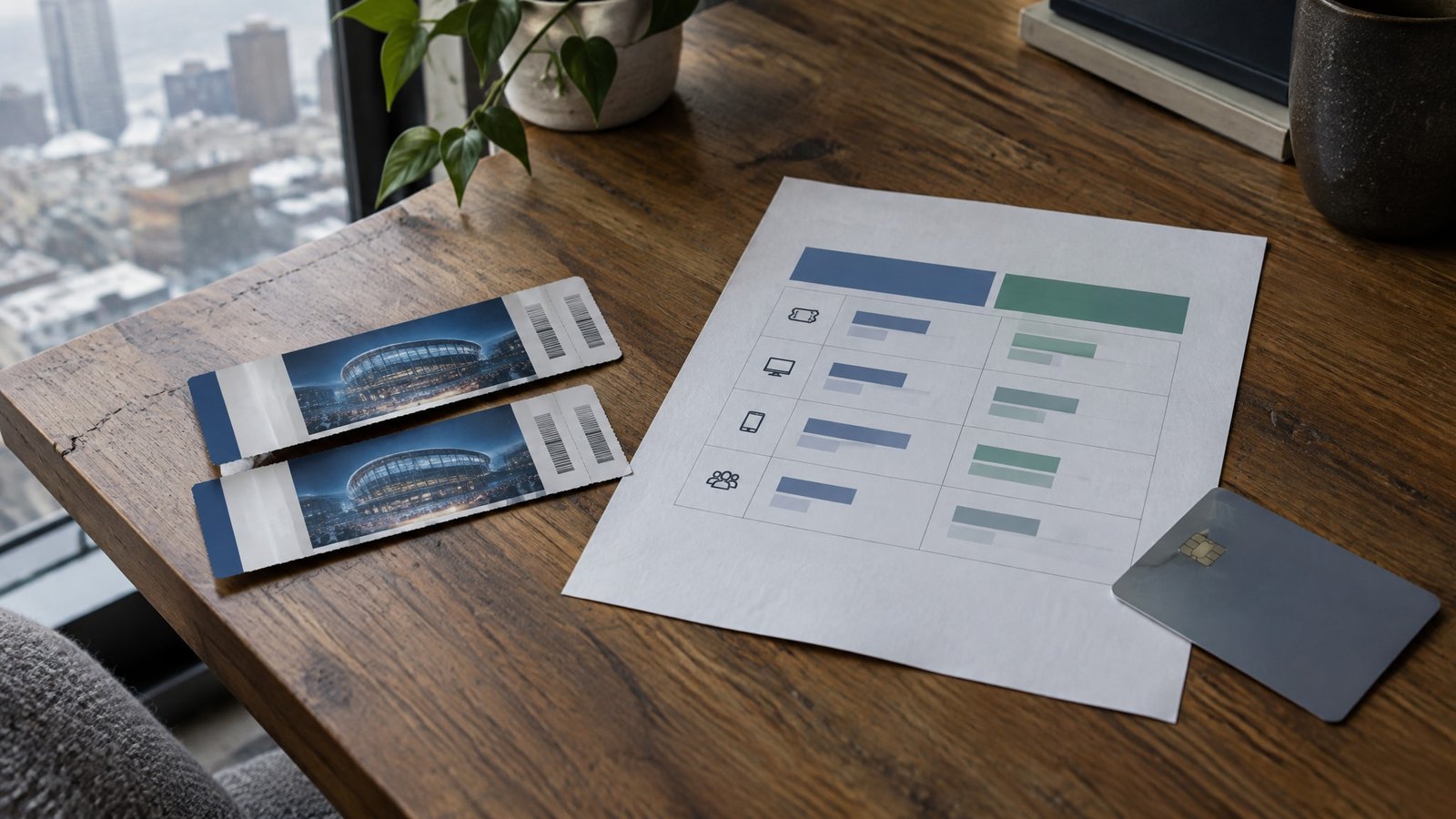
Big arena tours at Ball Arena draw buyers from several directions at once. The venue box office, Ticketmaster, resale marketplaces and peer-to-peer groups all sell seats for the same show, and the final price and the level of risk differ a lot between them.
This guide compares those channels on fees, reliability and refund terms. It treats the primary face value as the baseline and stays qualitative on fees, because the amounts change by event and by seller.
Arena Tour Tickets in Denver: Official Sellers vs Online Resellers
Denver Tickets earns a commission on some of the ticket links on this site. That does not change how the channels are described here, and the comparison applies whether or not a given seller pays a commission.
Ball Arena tickets reach fans through two broad routes. Primary sellers issue the original tickets at face value. Resellers list tickets that someone else already bought, at a price the seller sets.
A fan who is still deciding between a big arena show and a smaller room can start with the Mission Ballroom vs Ball Arena comparison. Fans who have settled on the arena can check the Ball Arena concert schedule through 2027 to confirm which tours are on the calendar and when, before comparing sellers.
Denver Arena Ticket Marketplace Comparison
| Channel | Who runs it | Price vs face value | Fees | Main risk |
|---|---|---|---|---|
| Ball Arena box office | The venue | Face value | In-person purchases can avoid online service charges; the venue may add its own | Limited to what remains unsold |
| Ticketmaster | Primary seller for many events; also lists resale for some | Face value on first sale; resale is set by sellers | Service fees usually appear during checkout | Primary seller varies by event, so check the event page |
| Resale marketplaces | Third-party platforms | Above or below face value | Buyer fees often added at checkout | Protection depends on each platform’s guarantee terms |
| Peer-to-peer groups | Individuals in social media buy-sell groups | Whatever the seller asks | No platform fees, but no platform protection | Highest exposure to scams and altered tickets |
The table ranks channels by protection, not by price. The cheapest listing is not necessarily the cheapest purchase once fees and risk are counted.
Official Ticket Sites for Denver Arena Shows
Official sellers are the ones the artist, promoter or venue has authorized to sell the original tickets. Their price is the reference point for everything else.
Face value matters because it is the only number that does not depend on demand. A resale listing is only a deal or a markup when it is measured against the primary price for the same section.
Ball Arena Box Office and Primary Online Sales
Ticketmaster is a common primary seller for Ball Arena shows, but not a universal one. The seller named on each event page is the authority, and that is the first thing a buyer should confirm.
Buying in person at the box office can avoid the online service charges that appear at web checkout, although the venue may add fees of its own. The trade-off is availability: the box office sells what is left in the primary inventory, and it cannot offer seats that are only on the resale market.
Buyers who want the primary price should start here and at the named primary seller before looking anywhere else.
Presales, Fan Clubs and Access Codes
Presales are the second route to primary seats. Artist fan clubs, venue lists, credit card programs and promoter newsletters often issue access codes that open sales before the general on-sale.
Those seats carry the same face-value pricing as the general sale, so a code is usually the cheapest way into a popular tour. A fan who joins the fan club of a favorite artist before the tour is announced gets the earliest shot at those seats, and codes can be single-use, so timing matters.
Some official sellers also run their own resale option for select events. Ticketmaster, for instance, can list resale tickets for some shows, so the primary seller may appear as both the first sale and the resale venue. That blurs the line between official and resale, so buyers should check whether a listing is a primary ticket or a resold one before paying.
Ticket Reseller Fees in Denver: Comparing the Final Total
A listed price tells a buyer very little by itself. The figure that matters is the amount charged at the last step of checkout, for the same section and row, across every channel being compared.
Fee Structure: Official Box Office vs Resale Marketplaces
Resale listings can sit above or below face value, depending on demand for that show. Most marketplaces also add buyer fees at checkout, and delivery or service charges may appear on top.
At the box office, an in-person purchase can skip the online service charges that web sales carry. The venue may still add fees of its own, so the box office is not automatically free of extras.
Fee amounts are not quoted here because they change by event, seller and platform. Each checkout page shows the actual figure.
How Resale Fees Stack Up at Checkout
Drip pricing is the pattern to flag. A low ticket price appears first, and service or delivery fees are added at the final checkout step, which makes the first number misleading.
A sensible habit is to put two or three tabs side by side, pick the same section and row, and click through each checkout until the full total appears. Buyers should compare totals, not listings. Some platforms show all-in prices from the start, and those are easier to compare.
A resale listing with a lower sticker price can still end up costing more than a primary ticket once fees are in.
When Resale Is Cheaper, and When It Is Not
Resale is not always a markup. The price of a resold seat follows demand, and demand varies sharply from one tour to the next.
For a show with unsold seats, resale listings can drop below face value as sellers try to recover something before the doors open. For a sold-out show, the reverse happens, and listings can sit well above face value because no primary seats remain.
Fans watching their budget for a smaller room can also look at cheap Mission Ballroom ticket deals, where the price pressure is different from an arena date.
Resale Price Movement Near Showtime
Prices tend to soften near showtime when a show has plenty of supply, because sellers who cannot attend would rather sell at a discount than not at all. That pattern is not guaranteed, and it does not hold for high-demand tours, where prices can hold or climb.
Waiting is a gamble, not a strategy. A fan who needs specific seats, or who is buying for a group, takes on the risk that the seats disappear or the price rises. The reliable approach is to compare the same seat across sellers on the day of purchase and decide from the totals.
Fraud Risk on Resale Sites and Buy-Sell Groups
Fraud risk is not spread evenly across channels. It concentrates where a buyer has the least protection, and peer-to-peer groups carry the most exposure, followed by lookalike websites that imitate real sellers.
Common Scam Patterns in Peer-to-Peer Groups
Buy-sell group listings often ask buyers to pay by direct transfer or a payment app outside any marketplace. That removes the purchase protection a marketplace guarantee would offer, and it is the clearest warning sign.
The other common patterns are:
- Off-platform payment requests. The seller asks to move the deal to a payment app or messaging thread.
- Impersonated group admins. A scammer copies an admin’s name and photo and offers to “hold” money or tickets.
- Duplicate or altered ticket PDFs. The same ticket is sold to several buyers, or a screenshot is edited. Only the first scan at the door works.
- Lookalike sites. A page that mimics a known seller’s design but uses a different web address.
Buyers who still use these groups should check seller history, ask for an app transfer instead of a PDF, and avoid paying by methods that cannot be reversed.
Verified Resale Tickets in Denver: What the Label Covers
A “verified” label is defined by each platform. It covers only what that platform checks, which might be seller identity, ticket validity at listing or a transfer process, and it does not necessarily promise that the price is fair or that entry is guaranteed in every case.
The guarantee terms are where the real protection sits. Before paying, a buyer should read what the marketplace promises if a ticket is invalid or an event is canceled, and how a claim is filed. A badge without readable terms tells a buyer very little.
Marketplace guarantees change the risk picture: a failed purchase on a platform with a buyer guarantee has a path to a remedy, while one in a peer-to-peer group usually does not.
Refund and Exchange Policies for Arena Tickets
Refund rules depend on what happens to the show and where the ticket was bought. Canceled shows generally refund. Postponed shows usually keep tickets valid for the new date, and rescheduled shows often work the same way, sometimes with a refund window.
Resale purchases often follow the marketplace’s own guarantee instead of the primary seller’s policy. A buyer who purchased on resale should read that platform’s terms and not assume the venue will handle the refund.
Cancellations, Postponements and Ticket Transfers
Refunds are only half the story. The way a ticket is delivered affects how easily it is used at entry.
- App transfer. The seller sends the ticket to the buyer’s account in the official ticketing app. This is generally the cleanest route because the ticket is reissued to the new holder.
- PDF. A file can be copied, which is why duplicate PDFs are a known scam.
- Will-call. The ticket is held at the venue and collected with ID, which suits some purchases but requires the right name and documents.
A resold ticket that cannot be transferred cleanly can be refused at the door, so the transfer method should be known before payment.
Choosing a Safe Place to Buy Concert Tickets in Denver
The safest purchase is the one where the seller is named, the total is visible and the protection is written down. No channel is risk-free, and a safe seller still cannot make a show cheaper than the market allows.
Trusted Platforms and a Pre-Purchase Checklist
Official sellers and established marketplaces with written buyer guarantees sit at the safer end. Peer-to-peer groups sit at the other end, and they are a poor fit for buyers who cannot afford to lose the money.
Before paying, buyers can run through five checks:
- Named seller. Confirm who the primary seller is on the event page.
- All-in total. See the full price, including fees, before entering payment details.
- Buyer guarantee. Read what is covered and how claims work.
- Transfer method. Know whether the ticket arrives by app, PDF or will-call.
- Refund policy. Find the terms for cancellation and postponement before checkout, not after.
The next step is practical. Browse the upcoming Denver concert dates for 2026 and 2027, check the Ball Arena schedule for the tour in question, and choose a seller from the ticket options listed for that date.
Frequently asked questions
How does Ticketmaster resale work?
For some events, Ticketmaster lists tickets that fans have resold alongside its own primary inventory, so the same site can show both. Buyers should check whether a listing is a primary ticket or a resold one, because pricing and terms can differ. Availability varies by event, so the event page is the place to confirm.
Which ticket resale sites are safe?
Established marketplaces with written buyer guarantees are the safer choice, because a failed purchase has a route to a remedy. A “verified” label only covers what that platform checks, so the guarantee terms matter more than the badge. Peer-to-peer groups and lookalike websites carry the most risk.
Is it cheaper to buy concert tickets online or at the box office?
Buying in person at the box office can avoid the online service charges that appear at web checkout, though the venue may add its own fees. The box office only sells what remains in primary inventory, so it cannot help once a show has sold out. The reliable test is the all-in total for the same seat.
Do resale tickets get cheaper closer to the concert date?
They can, when a show has unsold seats and sellers want to recover some money before doors open. For sold-out or high-demand tours, resale prices can hold or rise above face value. Buyers should compare the same seat across sellers on the day they buy.